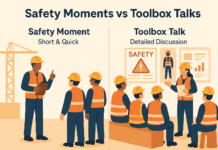
Every worksite faces unpredictable risks—from frayed cords to foggy communication. Yet one of the most effective tools for preventing incidents isn’t a high-tech sensor or a new policy manual. It’s a simple, 10-minute conversation. Safety toolbox talks, when done right, cut through complacency and reinforce safe behavior where it matters most: on the ground, in real time.
The best part? You don’t need a budget to run effective sessions. Free safety toolbox talk topics are everywhere—if you know where to look and how to use them.
This guide delivers actionable, ready-to-use topics that align with real hazards, OSHA guidelines, and human behavior on job sites. Whether you’re a foreman, safety officer, or project manager, these resources will save time, reduce risk, and keep your crew engaged.
Why Free Toolbox Talks Work (When Done Right)
Toolbox talks fail when they’re treated as checkboxes. "We did a talk about PPE today" means nothing if workers weren’t listening, didn’t relate, or left with vague takeaways.
Free topics gain value only when they’re specific, timely, and conversational. For example, discussing “slip, trip, and fall hazards” during a rainy season—on a site with muddy walkways and unmarked cords—carries immediate relevance. That’s the difference between compliance and culture.
Successful free talks share three traits:
- Focused scope: One hazard, one solution, one clear message
- Worker involvement: Questions, real examples, shared observations
- Actionable outcome: A behavior change, a hazard report, or a quick fix
Use free topics as launch points—not scripts. Adapt them to your site. Ask: Has this happened here before? Could it happen tomorrow?
Top 10 Free Safety Toolbox Talk Topics (With Real-World Use)
These topics are proven, widely available, and highly adaptable. Pull any one of them, modify for your context, and deliver in under 15 minutes.
#### 1. Proper Use of Personal Protective Equipment (PPE)
When to use it: Start-of-shift, after PPE violations, or when introducing new gear Real example: A roofer removes his hard hat to wipe sweat, then forgets to put it back on—falls from a ladder. Key discussion points: - Daily PPE checks (rips, cracks, fit) - Site-specific PPE requirements - Peer accountability: “See something, say something”
Common mistake: Assuming everyone knows the rules. Reiterate that PPE is the last line of defense—not the first.
#### 2. Ladder Safety
When to use it: During interior finishes, HVAC work, or electrical installations Real example: A worker leans too far to the side on an unsecured ladder, causing it to tip. Key points: - 3-point contact rule - Proper setup: 1 foot out for every 4 feet up - Inspection for cracks, loose rungs, or bent side rails
Pro tip: Bring a damaged ladder to the talk. Let the team identify the hazards.
#### 3. Electrical Hazard Awareness
When to use it: When working near panels, temporary power, or wet conditions Real example: A worker uses a damaged extension cord in a puddle—receives a shock. What to cover: - GFCI use near water sources - Recognizing damaged cords and plugs - Lockout/tagout basics (even for non-mechanics)
Limitation: Toolbox talks aren’t training. Use this to prompt follow-up for certified electrical safety training.
#### 4. Slips, Trips, and Falls
When to use it: After near-misses, in cluttered areas, or during demolition Real example: A trip over a misplaced tool bag leads to a sprained wrist. Focus areas: - Housekeeping: “Clean as you go” culture - Marking wet floors and cable crossings - Proper footwear
Engagement idea: Have workers point out 3 trip hazards they’ve seen this week.
#### 5. Heat Stress Prevention
When to use it: Summer months, enclosed spaces, or high-exertion tasks Real example: A laborer collapses mid-day—heat exhaustion. Critical points: - Recognizing early symptoms (dizziness, nausea, cramps) - Hydration goals (one cup every 15–20 minutes) - Buddy system: monitor each other
Limitation: Free topics often lack site-specific thresholds. Add your site’s heat index protocol.
#### 6. Hand Tool Safety
When to use it: At tool issue stations or after minor injuries Real example: A chisel with a mushroomed head fragments, sending metal into a worker’s eye. Key messages: - Inspect before use - Use the right tool for the job - Store properly to avoid damage
Workflow tip: Tie this talk to morning tool checks—make it routine.
#### 7. Working at Heights
When to use it: Scaffolding, roofing, or elevated platforms Real example: A worker leans over a guardrail to reach a tool—nearly falls. What to stress: - Fall protection requirements (guardrails, harnesses) - Harness inspection (webbing, D-rings, buckles) - Rescue planning
Reality check: Many free topics skip rescue. Add: How do we get someone down safely if they fall and are suspended?
#### 8. Hazard Communication (HazCom)
When to use it: When new chemicals arrive or SDS updates are issued Real example: A worker mixes two cleaners, releasing toxic fumes. Cover: - Reading SDS labels - Proper storage and segregation - Spill response basics
Use case: Print a sample SDS and walk through one section (e.g., PPE recommendations).
#### 9. Back Safety and Proper Lifting
When to use it: Material handling, plumbing, or drywall work Real example: A worker twists while lifting a 50-lb bag—throws out his back. Key points: - Lift with legs, not back - Avoid twisting - Use mechanical aids when possible
Engagement tactic: Demonstrate poor vs. proper form with a volunteer.
#### 10. Situational Awareness
When to use it: High-traffic zones, crane operations, or shift changes Real example: A worker steps into a blind spot—struck by a reversing forklift. Focus on: - “Heads up, eyes open” mindset - Designated walkways - Signaling and communication
Pro insight: Situational awareness isn’t instinctive. It’s trained.
Where to Find Reliable Free Toolbox Talk Topics
You don’t need to write from scratch. Trusted sources offer free, printable, and customizable talks—just ensure they’re current and applicable.
Best sources for free topics:
- OSHA.gov
- Free PDFs, fact sheets, and industry-specific guidance. Most are public domain and easily adapted.
- National Safety Council (NSC)
- Offers free weekly safety tips and downloadable toolkits—ideal for recurring sessions.
- CDC/NIOSH
- Research-backed, with topics like hearing loss prevention and ergonomics.
- Construction Industry Safety Initiative (CISI)
- Provides ready-to-use talks focused on high-risk construction hazards.
- SafetyNow, SafetyInfo, and Safety Toolbox Talks (dot com)
- Mixed quality, but many free downloads available. Vet for accuracy and readability.
Red flags in free content: - Generic language (“always wear PPE”) - No discussion prompts - Poor formatting or broken links
Always customize: Insert your company name, site details, and incident history.
How to Deliver a High-Impact Free Toolbox Talk

Having the topic is half the battle. Delivery determines impact.
- #### Structure for Engagement:
- Start with a question or story: “Has anyone here seen a ladder set up wrong this week?”
- Explain the hazard: Use facts, not fear. “Falls cause 1 in 5 construction deaths.”
- Show real examples: Bring damaged equipment or photos from your site.
- Invite input: “What would you do if you saw this?”
- End with action: “Before you clock out, check your harness and report anything damaged.”
#### Mistakes to Avoid: - Reading verbatim from a script - Talking at workers instead of with them - Skipping attendance or sign-in sheets (needed for records)
#### Timing: Aim for 10–15 minutes. Longer = attention drift. Shorter = missed nuance.
Making Free Topics Feel Fresh (Without New Content)
Repetition is necessary—but boring. Keep free topics engaging by rotating delivery methods.
Try these variations: - Scenario-based: Describe a near-miss, ask the team how they’d respond - Walk-and-talk: Conduct the session at the actual hazard location (e.g., by a scaffold) - Quiz format: Turn key points into a 3-question pop quiz with small rewards - Worker-led: Assign crew members to lead a talk monthly
Even the most basic topic—like PPE—lands differently when delivered beside a locker room mirror, asking: “What’s missing on you right now?”
Critical Limitations of Free Safety Talks (And How to Fix Them)
Free topics aren’t flawless. Awareness without follow-through is wasted effort.
Common gaps: - No documentation: Free talks often lack sign-in sheets or records - No tracking: Can’t prove frequency or attendance during audits - No follow-up: Hazard reported in talk? Was it fixed?
Solutions: - Use a free Google Form or clipboard log for attendance - Assign a “safety action item” from each talk (e.g., “Report frayed cords by EOD”) - Review past topics monthly—measure progress
Free content works best within a structured safety program—not as a standalone fix.
Final Step: Turn Free Topics Into Real Behavior Change
Free safety toolbox talk topics are only valuable when they spark action. The goal isn’t to check a box—it’s to change behavior.
Next time you run a session: - Pick a relevant hazard - Customize the message to your crew - Ask questions, not just give answers - Assign one small follow-up task
Do that consistently, and you won’t just have compliance. You’ll build a culture where safety is spoken, seen, and shared—every single day.
Frequently Asked Questions
What are the most common toolbox talk topics? PPE, ladder safety, fall protection, electrical hazards, and heat stress top the list due to their high incident rates across industries.
Can I use free toolbox talks for OSHA compliance? Yes, as long as they’re documented, relevant, and delivered regularly. OSHA doesn’t require paid content—just effective communication.
How often should toolbox talks be held? Weekly is ideal. Some high-risk sites do them daily. Monthly is the bare minimum for active sites.
Do toolbox talks need to be signed off? Yes. Attendance records prove compliance during audits or investigations.
Should toolbox talks be recorded? Not required, but highly recommended. Keep sign-in sheets, notes, or photos (with consent) for your safety file.
Can workers lead toolbox talks? Absolutely. Peer-led sessions often have higher engagement and reinforce ownership.
Are free toolbox talks effective? Only if they’re relevant, interactive, and followed up. Generic, one-size-fits-all talks have little impact.
FAQ
What should you look for in Free Safety Toolbox Talk Topics for Real-World Worksites? Focus on relevance, practical value, and how well the solution matches real user intent.
Is Free Safety Toolbox Talk Topics for Real-World Worksites suitable for beginners? That depends on the workflow, but a clear step-by-step approach usually makes it easier to start.
How do you compare options around Free Safety Toolbox Talk Topics for Real-World Worksites? Compare features, trust signals, limitations, pricing, and ease of implementation.
What mistakes should you avoid? Avoid generic choices, weak validation, and decisions based only on marketing claims.
What is the next best step? Shortlist the most relevant options, validate them quickly, and refine from real-world results.